Covered inside Nepal's remote region, the Tsum Valley Trek is more than just a trek. It is a therapy into the ancient Tibetan culture, monasteries, and the beauty of the untouched mountains. Being far from any crowded trails like Everest and Annapurna, this valley has a lot to offer, like authenticity, peaceful villages, and outstanding views of mountains like Ganesh Himal.
In this blog, you will get a detailed Tsum Valley Trek itinerary, tips from a local expert, the real cost breakdown, the best season to trek, permit and entrance fee requirements, Cultural highlights like Mu Gompa and more. Whether you are seeking peace, spiritual vibrations, or a memorable adventure in the Himalaya, this blog will help you plan your next vacation with confidence.
The Tsum Valley Trek is an opportunity to visit a little-known Himalayan gem hidden in the remote northern Gorkha region of Nepal. This trek will lead you to the old Buddhist villages, centuries-old monasteries, and beautiful mountain scenery with the views of mountains such as Ganesh Himal, Sringi Himal and Himalchuli. The Tsum Valley is peaceful, culturally rich and highly spiritual, unlike the popular trails. If you are planning this adventure, having a clear Tsum Valley Trek itinerary is essential. Having a well-planned Tsum Valley Trek itinerary will help you enjoy every moment and stay organised throughout your adventure.
This blog will provide a day-to-day schedule, useful advice, and other information that will help you to prepare. Be it the desire to see the real local culture, stunning nature, or the serene mountain scene, this trek will provide an unforgettable experience of the off-beaten path.
Overview of the Tsum Valley Trek
Tsum Valley Trek itinerary is a moderately challenging route in the Manaslu Conservation Area, along the border with Tibet. It is less touristy and highly spiritual, with trekkers having an opportunity to travel back in time to a place where the ancient ways of life are still practised.
The Tsum Valley Trek is usually 15-18 days long, depending on the package and whether you are doing it in conjunction with the Manaslu Circuit. On the way, you will come across beautiful villages, friendly people of Tibetan origin and spend your nights in teahouses which depict the culture and beauty of the valley.
History of the Tsum Valley
The Tsum Valley Trek area is closely related to Tibetan Buddhism. This holy valley has been the home of practitioners of the teachings of Padmasambhava and Milarepa over a period of centuries. The origin of the name Tsum is the word Tsomb, which is Tibetan, meaning vivid. The valley has remained a place with its culture, language, and traditions intact due to the isolation.
The valley was officially opened to trekkers only in 2008, and the Tsum Valley Trek itinerary is one of the newer, less trodden trekking routes in Nepal.
Price of Tsum Valley Trek: What It Includes
The trek to Tsum Valley typically costs between USD 1,200 to 2,000, depending on the number of days of trekking, services included, and the agency you are booking with. The common trekking packages usually include:
Transfers to and from the airport and stay in a Kathmandu hotel
Any ground transport
Registered guide and porter of the government
Every meal on the trek
Teahouse accommodation
Restricted Area Permits & Manaslu Conservation Area Permit
Emergency and first aid assistance
Trekking map and duffel bag
Remember that other expenses, such as hot showers, charging devices or additional snacks, are usually not included.
History and Spiritual Significance of Tsum Valley
Tsum Valley is deeply rooted in Tibetan Buddhism and is believed to be blessed by Guru Padmasambhava and Milarepa, two of the most important figures in Tibetan Buddhism. The word “Tsum” comes from the Tibetan word Tsomb, meaning vivid or clear.
Due to its isolation the valley has preserved ancient traditions, unique dialects, and spiritual practices. Until recently, customs like polyandry and sky burials were common here.
What Makes the Tsum Valley Trek Unique
Tsum Valley Trek has none of the hustle and bustle of popular treks such as Everest Base Camp or the Annapurna Circuit; instead, it has tranquillity, authenticity, and spirituality. It is one of the culturally rich and less-trodden treks of Nepal. The Tsum Valley Trek itinerary is ideal for those who want to have a purposeful Himalayan experience without the masses, with its peaceful paths, religious sites, and welcoming local villages.
Culture and Traditions Along the Trail
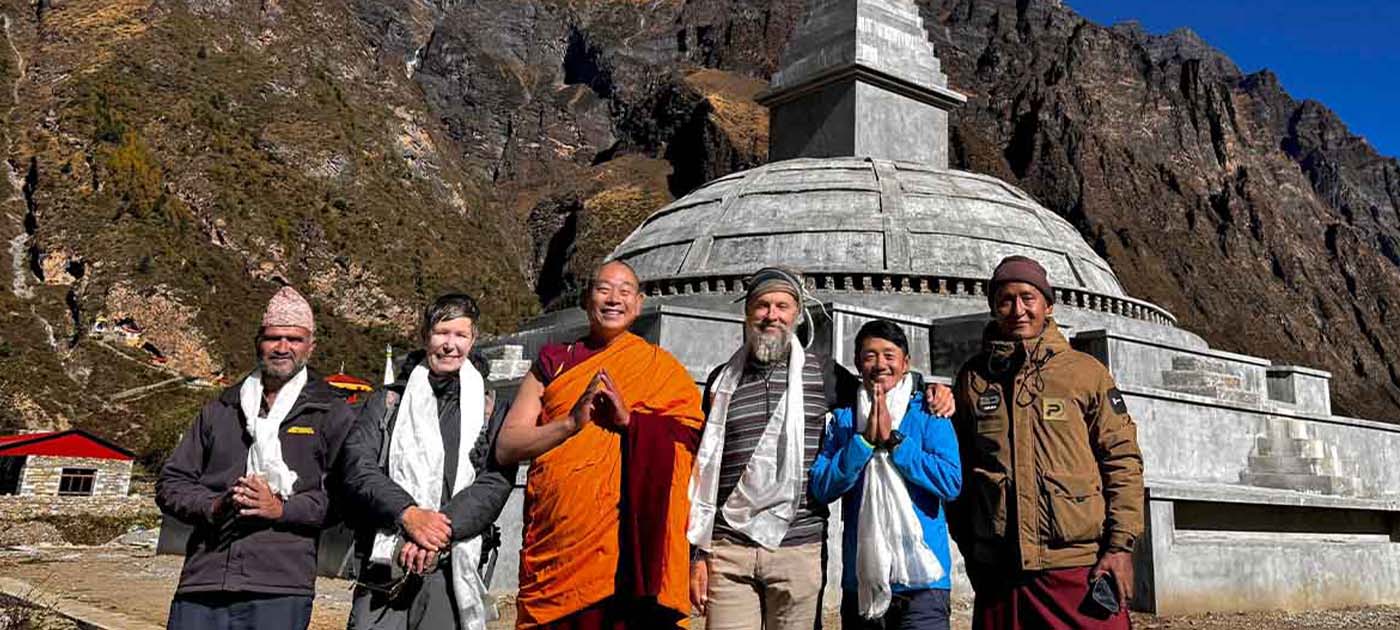
Our guest with monks during their Tsum Valley Trek
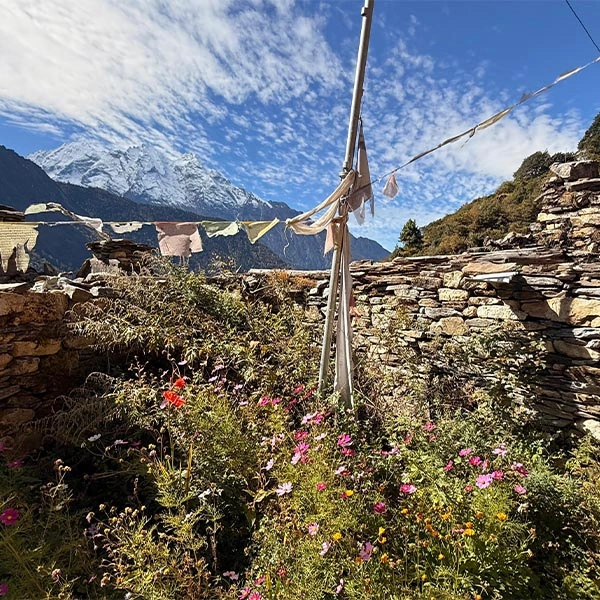
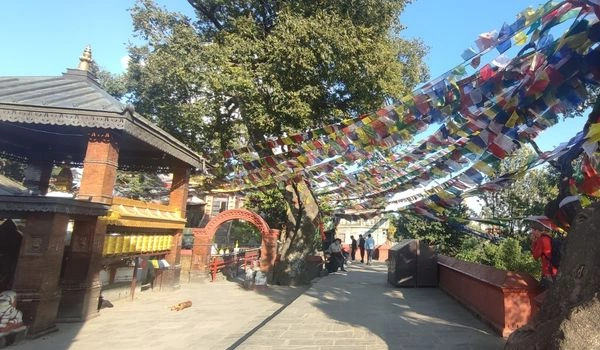
The Tsum Valley Trek is one of the major reasons because it is closely related to Tibetan Buddhism. The trail will have many walls, prayer flags, spinning prayer wheels and old monasteries (Gompas) which indicate the spiritual depth of the valley. The locals use a Tibetan dialect and have customs that have not changed over the generations. Strange customs such as polyandry and sky burials, which were once widespread here, reflect how remote and undisturbed the valley has remained until recent decades.
Natural Beauty and Scenic Highlights
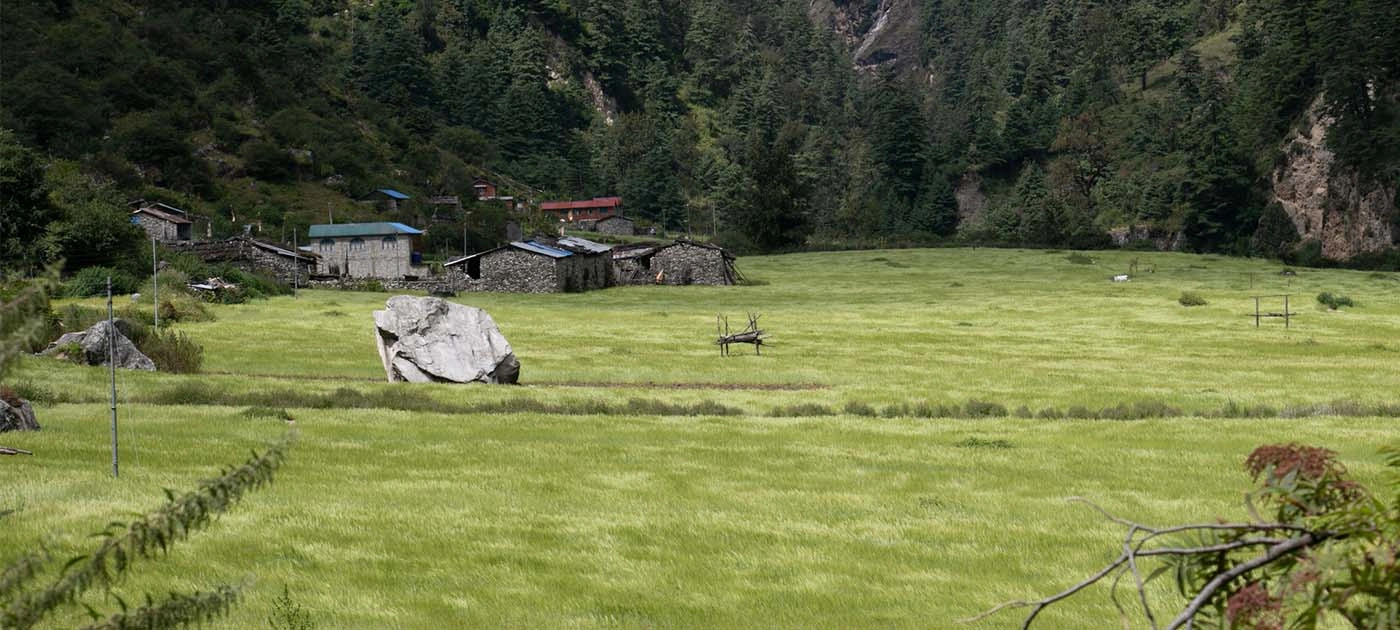
Breathtaking natural scenery awaits as you trek through pine and bamboo forests decorated with rhododendron-covered hills, cascading waterfalls, and deep river gorges. During the spring, the trail is full of flowers. The higher you go, the more mountains come into view- Ganesh Himal, Sringi Himal, Baudha Himal, and Himalchuli make a beautiful background. Each of the days of the Tsum Valley Trek itinerary is a different panorama and relaxing beauty that makes this trip memorable.
What to Expect on the Tsum Valley Trek
Tsum Valley Trek is not just a trek, but a journey of tranquillity in the wild nature, historic culture, and holy Buddhist sites. It is a fairly difficult trail, through forest and stone steps, with gentle ascents. On the way, you will visit typical Tibetan villages where people are still living according to ancient traditions. Tsum Valley Trek will also lead you to religious places such as Rachen Gompa, Mu Gompa, numerous mani walls and prayer flags along the route. The nature enthusiasts will love rhododendron forests, mountain scenery, and the opportunity to see wildlife, such as Himalayan thar, blue sheep, or even a snow leopard. It is an exclusive journey that is a mix of culture and beautiful landscapes.
Tsum Valley Trek Itinerary (Day-by-Day Outline)
If you are looking for a peaceful and culturally rich trek in Nepal, this route is a great choice. It is a trekking program that will take you deep into the Tsum valley itinerary where you will trek through the traditional villages, have beautiful scenery and visit significant Buddhist places. Although this Tsum Valley Trek itinerary takes in the essential Tsum Valley circuit, it is also possible to add on to this by linking it with the Manaslu Circuit or by adding in side excursions to holy monasteries such as Rachen Gompa and Dephyudonma Gompa.
Here’s a sample Tsum Valley Trek itinerary to help you plan your journey.
Day
Route
Walking Hours
Altitude
1
Arrival in Kathmandu
–
1,400m
2
Kathmandu to Machha Khola
7–8 hrs
930m
3
Machha Khola to Jagat
6–7 hrs
1,340m
4
Jagat to Lokpa
6 hrs
2,240m
5
Lokpa to Chumling
5–6 hrs
2,386m
6
Chumling to Chhokang Paro
5 hrs
3,010m
7
Chhokang Paro to Nile
5 hrs
3,361m
8
Nile to Mu Gompa
4 hrs
3,700m
9
Acclimatization day at Mu Gompa
–
3,700m
10
Mu Gompa to Chhokang Paro
6 hrs
3,010m
11
Chhokang Paro to Lokpa
6 hrs
2,240m
12
Lokpa to Jagat
7 hrs
1,340m
13
Jagat to Machha Khola
7 hrs
930m
14
Machha Khola to Kathmandu
8 hrs
1,400m
15
Departure
–
–
The Last Village in Tsum Valley: Mu Gompa
Mu Gompa is the final settlement in the Tsum Valley, as well as its spiritual center as it is perched at an elevation of approximately 3,700 meters. It is the biggest and the most significant monastery in the area which was established in 1895 and has a small community of monks adhering to the traditions of Tibetan Buddhism. The monastery is built on a ridge that is high and gives stunning views of Ganesh Himal, the neighboring mountains and even the Tibetan plateau. Due to its serene location and religious ambience, Mu Gompa is regarded by many as the best part of the Tsum Valley Trek itinerary. Trekkers tend to visit this place to know more about Buddhist practices, meet the monks and have a quiet spiritual atmosphere. Arriving at Mu Gompa is an experience in time travel- a real reminder of how unique and culturally rich the Tsum Valley Trek experience is.
What Makes Mu Gompa Special
Located at 3,700 meters, Mu Gompa is the largest and most sacred monastery in the valley. It was established in 1895 and has dozens of monks who adhere to the Tibetan Buddhist beliefs. It is a monastery located in dramatic peaks with panoramic views of the Ganesh Himal and the Tibetan plateau.
Experiences to Have in Mu Gompa
The Tsum Valley Trek is one of the most unforgettable experiences, and the time at Mu Gompa is a part of it. Mu Gompa is a peaceful monastery, far from the noise of modern life. It is the best place to relax, meditate and experience the rich spiritual vibe of the Himalayas. Mu Gompa will have something special to offer regardless of whether you want some peace and quiet, a touch of local culture or a mountainous view.
Some of the experiences you can have during your visit are as follows:
Meditate in the monastery’s quiet chambers
Join morning or evening pujas (prayer ceremonies)
Hike to the nearby Dhephu Doma Gompa
Watch the sunrise over the Himalayas
Camp or stay in the basic monk guesthouses for a spiritual night
Why the Tsum Valley Trek Is a Must-Do Adventure
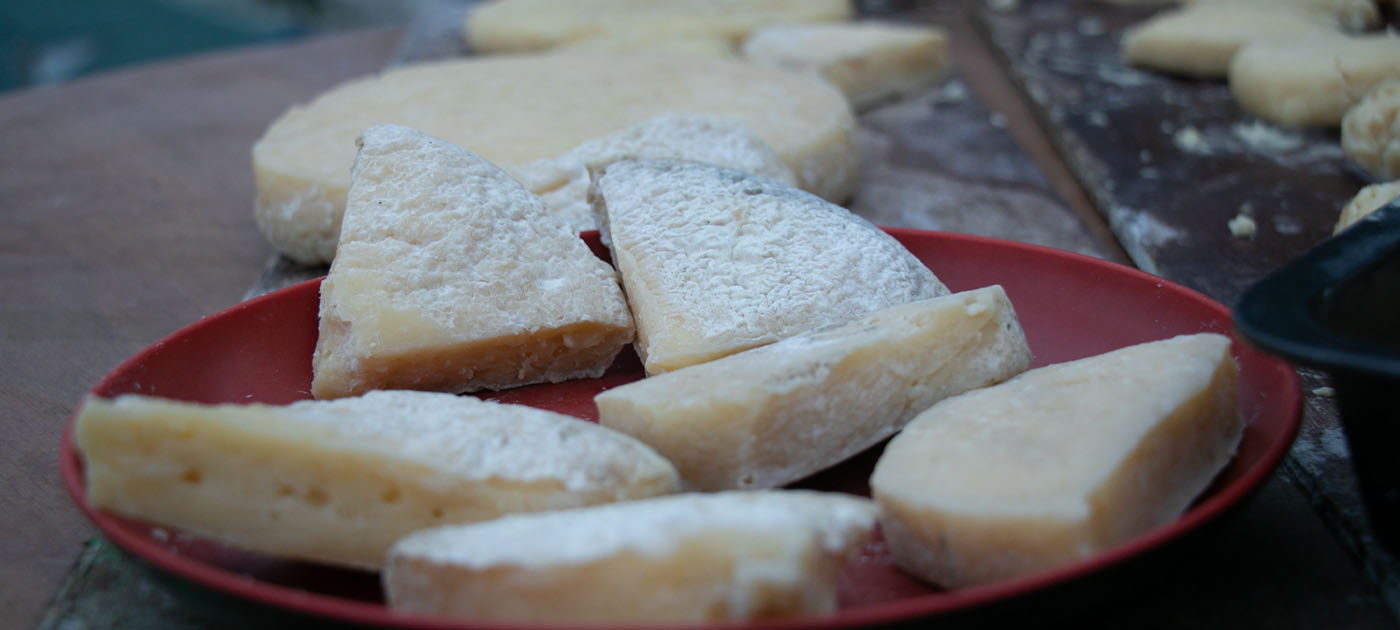
Fresh yak cheese which you can enjoy during your trek
Tsum Valley Trek is not the journey to a beautiful place only, but also an experience that allows you to connect with nature, culture and spirituality simultaneously. This is an isolated valley which has been isolated throughout the centuries and the distinctive Tibetan Buddhist culture has been preserved. During the hike, you will encounter hospitable local people, ancient monasteries, and traditional lifestyles that have not changed much over the years.
The trail presents serene woodlands, awe-inspiring mountain scenery, and an opportunity to hike through scenery that is seemingly uninfluenced by the modern world. In case you are dreaming of avoiding the crowds and finding a hidden corner of Nepal filled with history and spirituality, the Tsum Valley itinerary is an adventure you will never forget, which will leave a mark in your heart and mind.
Why Choose Adventure Glacier for Your Tsum Valley Trek
When trekking in a remote, restricted region, it's essential to choose a reliable, experienced local trekking agency. Adventure Glacier has built on the foundation of Himalayan experience, transparent operation and responsible tourism practices.
What makes Adventure Glacier one of the trusted trekking agencies in Nepal :
Local Expertise with Experience : Our agency was founded in 2004 by a former high-altitude porter and guide, who provides us with deep insights about the mountains while not fully relying on maps.
Local Guides and Porters : We hire guides and porters born and brought up in the trekking, which helps to ensure they provide authentic cultural information, and what we earn goes directly toward the locals.
Safety First policy : We have handcrafted an itinerary that follows strict acclimatization protocols, and guides are trained to be alert for any such situation. They are involved in different training programs for AMS, First Aid, and handling any unforeseen situations.
Personalize Itineraries : We handcraft each trek to personalize it based on trekkers' pace, experience, and comfort. We don't promote any automated program.
Proven Trust record : We have been reveviding 50% of our clients trusting us for their second, third, even fourth treks with us.
Responsible Tourism Practices : We promote low-impact trekking principles, and 3% of each of our booking income is used for local community support.
When you book with Adventure Glacier, you are not booking just a trek but an experience of a lifetime while also supporting local communities.
Is the Tsum Valley Trek suitable for solo trekkers?
No, in the Tsum Valley, you cannot trek alone. It is a restricted area, so you need to hike with at least one companion and a licensed guide booked by an agency.
When is the best time to do the Tsum Valley Trek?
Tsum Valley Trek is best trekked in spring (March-May) and autumn (September-November). These seasons also provide clear weather, consistent weather and most of the mountain views. Snow and heavy rain are not recommended during winter and monsoon seasons.
Is the Tsum Valley Trek crowded like other treks in Nepal?
No, the Tsum Valley remains an off-the-beaten path trek route as compared to other well-known treks such as the Everest Base Camp or Annapurna Circuit. You will have a quiet, wilderness experience with less trekkers on the trail.
What is the last village in the Tsum Valley?
Mu Gompa is the last village in the Tsum Valley at an altitude of approximately 3,700 meters. It is a distant monastery village close to the border with Tibet and has beautiful scenery and profound cultural experiences.
Nepal is more than trekking. There are cultural cities, wildlife safaris, village life, local food, educational tours, adventure, relaxation, and [...]