
Explore the unique tradition of Nepal’s Kumari Goddess, the living goddess revered by both Hindus and Buddhists.
Regd. No.: 26502/060/61
Kumari Goddess: Her Story, Selection, Powers and Traditions
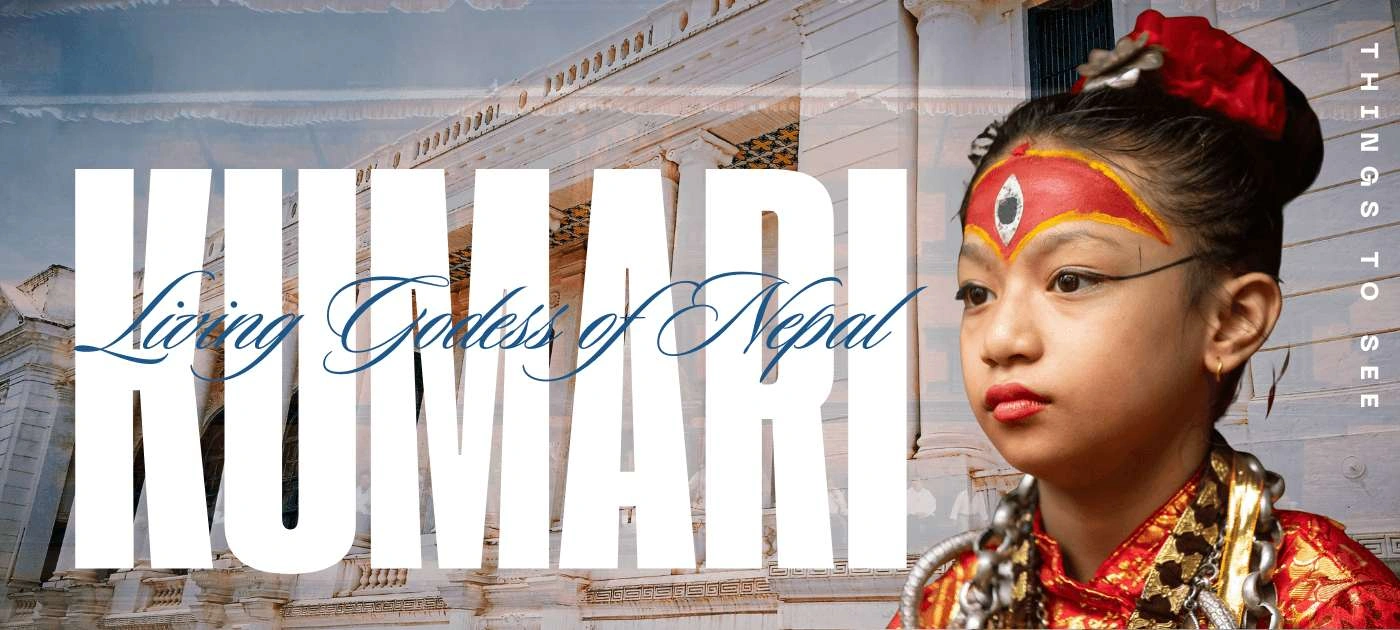
Do you know that Nepal has the Living Goddess? Yes, you heard it right! Kumari, the Living Goddess, is worshipped in Nepal with great devotion and faith.
The history goes back to the era of Jaya Prakash Malla; he was the one who started this unique and fascinating tradition of worshipping the Kumari. Nepal is rich in culture and traditions, and Kathmandu, being the city of temples, celebrates different festivals with huge crowds.
Who is Kumari?
The literal meaning of "Kumari" in Sanskrit is "virgin," a “young unmarried girl." And here in Nepal, the word represents something significant and extraordinary. It refers to a prepubescent girl and is considered the living embodiment of the goddess Taleju Bhawani. Additionally, she is also defined as the “goddess of beauty and strength," the manifestation of goddess Taleju Bhawani, “living incarnation of goddess Taleju," etc.
If you want to know more about her, in this blog we will explore how and when the tradition started, how Kumari is selected, when her Kumari tenure ends, what her daily life is like, and other significant details.
Key Highlights:
- Interesting history, origins, legends, and myths of the Kumari tradition
- Selection process and enthronement of Kumari
- Thirty-two physical perfection tests (considered as the divine qualities)
- Kumari residency and her daily life as the Living Goddess
- Life after Kumari and the completion of her tenure
- Festivals that are connected with Kumari
Introduction
As mentioned above, Kathmandu is known as the city of temples. You are welcome here with the ringing temple bells, prayer flags, and a crowd of people. Besides these, it is home to the Living Goddess, a little girl with divine power and beauty. The Kumari tradition was started in 1757 AD by King Jaya Prakash Malla. Since then, people have followed the tradition to this day.
Kumari, the Living Goddess, is an incarnation of the Taleju Goddess and a manifestation of Goddess Taleju(Durga). She carries the divine power of prosperity and good fortune. It is said that getting an opportunity to see and meet her is auspicious.
Cast and Lineage
Most people are confused about which caste the Kumari belongs to and which caste worships her. Here are the details regarding this.
Kumari goddess is chosen from a Buddhist family of the Shakya community for a devoted Hindu temple. Therefore, we can say that she is worshipped by both Hindu and Buddhist religions. Both Hindus and Buddhists honor her in different ways and with different religious faiths and frameworks.
In addition to this, she is considered the Living incarnation of Taleju Bhawani, the Hindu goddess in Hindu tradition, whereas according to Buddhist tradition, she is a manifestation of Vajradevi or Tara.
Hence, both of the religions worship her with great devotion, receive her blessings and admire her equally.
How did the Kumari Goddess Tradition originate?
There are many myths and histories regarding the origin of the Kumari tradition. Here are some of them. Before that, let me explain the goddess Taleju. She was the guardian deity (Kul Deuta) of the Malla Kings. Taleju Bhawani was brought by Harisimha Deva of the Karnata Kingdom of Tirhut in the 14th century. Harisimha was driven out of his kingdom by Muslim armies, and he fled to Nepal with Taleju Bhawani and came to Bhaktapur and established her in Bhaktapur, building a temple for her. It was later, in the early 17th century, that the Taleju Bhawani temple was built in Kathmandu as a representation of Bhaktapur’s Taleju Bhawani. The temple was built by King Mahendra Malla.
It was in 1757 AD that the Kumari tradition was first started by King Jaya Prakash Malla, and here are the myths.
Dice Game Between Taleju Goddess and King Jaya Prakash Malla
As the Taleju goddess was the guardian deity of the Malla Kings, all of them worshipped her and were great devotees, and one of them was King Jaya Prakash Malla. The goddess used to visit him when he opened the Shree Yantra (a divine instrument) and chanted the sacred mantra. She used to visit the palace in human form regularly. One night, they were playing the dice game as usual, and suddenly the goddess Taleju realized that King Jaya Prakash was having inappropriate thoughts about her, so she immediately left the palace and never visited the palace again. Later, the King realized his mistake and asked for countless apologies. He begged her for forgiveness and even performed many purification rituals to be forgiven. But she didn’t visit the place.
But one day, the Goddess Taleju came in a dream to the King and told him that she would never appear in human form or visit his palace either. Instead, she clarified that if the King wanted forgiveness from her, then he should select a young, pre-pubescent girl from the Shakya clan with 32 divine qualities, and establish as well to worship her as the Living Goddess.
Then, the king followed her order and did exactly what she mentioned and started the tradition of Kumari in Kathmandu.
Secret Meeting Between the Goddess Taleju and the King Jaya Prakash Malla
It is similar to the previous legends, but this is something different. Just like the previous one, the sacred mantra for calling the goddess, the regular meeting, and playing a dice game are all the same. Let me explain to you what is different.
Taleju Goddess visited the palace regularly to play the dice game, but on one condition. The condition was that the King should keep a secret about their meeting. He also agreed and did the same. But one day, when they were playing, the queen, wife of Jaya Prakash Malla, saw them and found out about their secret meetings at the palace. After the goddess saw the queen, she disappeared and never came back. The king made several requests to return, but she didn’t come.
One day, she came in the dream of the king and said she would reside inside the body of a younger girl from the Buddhist Shakya clan, and he should worship her to receive counseling and blessings from her, and the King did the same.
These are the two different chronicles about the origin of the Kumari tradition.
Selection and Enthronement of Kumari
Kumari selection process is not as simple as we think. There are several strict, ancient, and rigorous criteria and regulations. The young girls need to have 32 physical and divine qualities ad they are selected by a selection committee that is especially designated for the Kumari selection. The committee is the Bada Guruju (chief Brahmin of the country), Achahju priest of the Taleju temple. The royal astrologer and Pancha Buddha (Newar Buddhist priests of the Vajracharya caste).
Selection Steps:
Virgin (pre-pubescent) girl from the Shakya Clan
The first step is selecting a prepubescent, young girl from the Buddhist Shakya clan. They should be the daughter of a male Shakya who is a member of one of the 15 monasteries of Kathmandu.
Physical Perfection Test
Now, the girls go through a physical perfection test. The main physical test should have perfect health, no serious illness, and no blemishes. They shouldn’t have any scars on their body, and no bad smells should come. The main thing is that their horoscope should match the horoscope of the head of the nation. Thirty-two divine qualities they should have are
- Chest like that of a lion
- Well-spread shoulders
- Long arms
- Pure body
- Neck like a conch shell
- Cheeks like those of a lion
- Forty teeth: the first eight milk teeth and 32 second teeth
- White and nicely shaped teeth, no gaps between teeth
- Tongue small and sensitive
- Tongue moist
- Body broad at the shoulders and narrow at the waist
- Thighs like those of a deer
- Small and well-recessed sexual organs
- Chest like that of a lion
- Feet well-proportioned
- Spiralling lines on the soles of the feet
- Nails well-proportioned
- Long and well-formed toes.
- Feet and hands like those of a duck, with net-like lines
- Feet and hands soft and firm
- Beautiful complexion with white lustre
- Gold-coloured complexion
- Skin pores are small and not too open
- Hair-whorls stiff and turning to the right
- Hair black
- Forehead large and well-proportioned
- Head round with a cone-shaped top
- Body shaped like a banyan tree
- Robust body
- Voice clear and soft like a duck’s
- Eyes blue/black
- Eyelashes like those of a cow
Kalratri Test
After the 32 qualities test, all the candidates are sent home until the next test. And it is believed that during this time, the spirit of Kumari slowly enters their body.
The Kalratri test is performed on Maha Navami (the ninth day of Dashain). It is also called the calmness test or fearless test. On the eighth day, Maha Asthami, 108 buffaloes and goats are sacrificed to the goddess Taleju in Mul Chowk, and the entire floor is filled with blood, and the selected girl should walk on the bloodied floor with the heads of buffaloes and goats there at 1 AM. They shouldn’t show any emotions, and they shouldn’t be scared of the blood and heads. The one who matches everything perfectly is selected.
Selection and Enthronement
Now, once she passes the fearlessness test, she is taken to the Enthronement ceremony. She is seated, and the priest performs several rituals by purifying her body parts while reciting several mantras. Once completed, she is dressed, her hairstyle is done, jewelry is put on her, and she is then placed on a beautifully carved wooden throne. After that, she holds the sword of Taleju, and the final transformation is done. Now, she is a royal Kumari until she loses her divine status. She stays in Kumari Ghar and is worshipped with great devotion and enthusiasm.
Daily Life of Goddess Kumari
The young girl who is selected as Kumari lives in the Kumari Ghar of Kathmandu Durbar Square. She stays there with the caretakers; they are from the Gubhaju caste. As a living goddess, she has a day around daily worship, receiving devotees, and blessing them. She also becomes part of several religious ceremonies.
Early in the morning, she is washed, she is dressed in red clothes, and her hair is drawn up. She puts a third eye on her forehead and wears a pair of bracelets.
In the daytime, she is visited by public devotees. Nepalese people can visit her, meet her by climbing upstairs, and receive blessings from her. People from other nationalities cannot climb upstairs; they should stay in the courtyard and wait until she makes her public appearance. They can admire her only from the courtyard.
Education for Kumari
The royal Kumari is not allowed to step outside the Kumari Ghar. She cannot attend school. However, these days the situation is different, and Kumari has started getting an education inside the Kumari Ghar. A private tutor visits and helps her receive an education.
Kumari Ghar
Speaking about the Kumari Ghar, it is located at Kathmandu Durbar Square near Gaddi Baithak. It is a separate residence provided for the Kumari until her tenure ends. It is a whole world to the Kumari, as she is prohibited from going outside of Kumari Ghar and steps outside only on special festival occasions. It was built by Jaya Prakash Malla in 1757 AD.
Want to explore more of Kathmandu’s cultural treasures? Join a Kathmandu City Tour and discover the city beyond the Kumari Ghar.
When Does the Kumari Tenure End?
Kumari's tenure ends after she reaches puberty. Once her tenure is complete, she is sent back home, bidding her a grand farewell. After she returns home, she is worshipped as a goddess for the next four days by her family members at her home. She returns to her normal life, and she has the freedom to go outside, stay with her friends, go to school, make friends, and start a different life. But she still holds an important place in cultural history.
Can Ex-Kumari Marry?
Yes, an ex-kumari can get married just like other normal people after her tenure is completed. There are several misconceptions and myths about the marriage of a Kumari, such as the death of the husband soon after their marriage and complications in marriage.
But many ex-kumaris are married and spending their happily married life, and some of them even have children, so these are only myths and rumors that they should not marry.
Can You Meet Kumari?
The royal Kumari of Nepal only makes a special appearance for international visitors from the window of the top floor. All the visitors must stay in the ground courtyard and wait for a glimpse. Nepali visitors are allowed to meet and greet her by going upstairs. There are several places where Kumari is worshipped, and the Kumari of Kathmandu is the royal Kumari. Some of the international visitors can request to visit the Kumari of other places like Patan, Bhaktapur, and Bungamati, etc.
Present Kumaris of Nepal
As mentioned above, there are many other Kumaris in other places who are worshipped as the Living Goddess in their place and in their community, and some of them are
Royal Kumari (Kumari of Kathmandu)
Aryatara Shakya, daughter of Pratistha Shakya and Ananta Shakya, is the formal royal kumari of Kathmandu. She was chosen as a Kumari when she was only 2 years and 8 months old.
Patan
Nihira Bajracharya is the current Kumari of Patan. It was in 2018 that she was chosen as the Kumari of Patan. She was 5 years old at that time.
Bhaktapur
Luniva Bajracharya is the Kumari of Bhaktapur. The Kumaris of Bhaktapur are also called “Ekantakumari”. They are chosen from either the Gubhaju or Shakya castes. Luniva was chosen as Kumari at the age of 4 in the year 2021.
Bungamati
The living goddess, Kumari of Bungamati, is Yubika Vajracharya. She has been worshipped as Kumari since 2022. She was only 4 years old when chosen.
Nuwakot
There is a Kumari in the Nuwakot district, and she is Prarthi Dangol. She was chosen at the age of 6 in the year 2022.
Festivals Associated with Kumari
Kumari is associated with several festivals, and there are several festivals that Kumari attends.
Indra Jatra
Indra Jatra is also known as the festival of rain and good harvest. It is celebrated with great fanfare, especially by the Newa people of Kathmandu in September. The streets of Indrachowk, Makhhan, Ason, Basantapur, etc., are filled with several masked dances (Lakhey dance). It is an eight-day-long festival and is also known as Kumari Jatra because, during this Indra Jatra, Kumari comes out of her residence and is carried through the historic streets of Kathmandu in a ceremonial procession along with other smaller chariots of Ganesh and Bhairav.
9th Day of Dashain (Maha Navami)
The Taleju temple, which remains closed throughout the year, is opened on the 9th day of the Dashain festival, also known as Maha Navami. The Living Goddess, Kumari, is also taken to the Taleju Temple.
Seto Machhindranath Jatra
Seto Machhindranath Jatra is one of the biggest festivals celebrated in Kathmandu, and it is dedicated to the god of rain and is a 3-day-long chariot-pulling festival. The chariot is pulled through Ason, Indrachowk, and surrounding areas to Lagan in Basantapur. During this Jatra, Kumari also comes to the premises of the Jatra celebration to observe the whole ritual.
Practical Tips For the Visitors:
Are you making a plan to visit the Kumari Ghar? Here are a few things you must keep in mind before visiting the Kumari residency:
- Dress in a plain way: Kumari is the Living Goddess of Nepal and is the embodiment of Goddess Taleju. So, remember you are going for a glimpse of the Living Goddess. Therefore, dress respectfully in a plain manner.
- Do not Make Noise: After you enter the Kumari Ghar, stay silent and maintain peace. Also, do not make unnecessary noise when waiting for her or viewing her.
- Follow the Rules and Regulations: The Kumari Ghar is a sacred residence, so treat the building accordingly. Do not touch or hamper any objects/items in the building. The caretakers or your guide will explain certain rules and instructions; make sure you listen carefully and obey them.
- No photography or videos are permitted: You are strictly prohibited from clicking any pictures or filming videos of the Kumari during her appearance.
Conclusion
In conclusion, Kumari is more than just a living goddess; she is a unique part of Nepal’s history, culture, and living traditions. From her careful selection to the rituals and festivals surrounding her, the Kumari tradition reflects the deep connection between faith and everyday life in the Kathmandu Valley. Visiting the Kumari Ghar offers a chance to experience this tradition up close and understand why the Kumari continues to hold such a special place in Nepalese culture.
If you want to experience more of Nepal’s rich culture and heritage, explore more travel experiences. And if you are planning a trek in Nepal or visiting other destinations and need help choosing the right tour, feel free to contact us. We will be happy to help you plan your Nepal journey.
Frequently Asked Questions
When does a Kumari lose her divine status?
Kumari loses her divine status when she reaches puberty and gets her first menstruation.
Can a former Kumari marry?
Yes, a former Kumari can get married after her tenure ends. Although there are many misconceptions, like marrying a Kumari will bring complications in married life, there is no such evidence to justify.
How is the Kumari selected?
The Kumari is selected through a traditional process based on specific physical, astrological, and cultural criteria. She must also pass various traditional examinations before being appointed as the Kumari.
Where can I see the Kumari in Nepal?
The royal Kumari lives in the Kumari Ghar at Basantapur Durbar Square in Kathmandu. Other Kumari traditions also exist in places such as Patan and Bhaktapur.
Can I take photos of the Kumari?
No, photography and video recording of the Kumari are generally prohibited when she appears at the window. Visitors should follow the instructions given at the Kumari Ghar.
What happens when a Kumari stops being a Kumari?
When a Kumari's tenure ends, usually after puberty or significant blood loss, a new Kumari is selected. The former Kumari then returns to ordinary family life.
Need Help? Call Us+977 9851084187orChat with us on WhatsApp
Latest Travel Blogs
Sep 28, 2026
Chitwan National Park Tour: Wildlife, Culture, and Family Adventure
If you think Nepal is only about mountains and trekking, then Chitwan National Park offers a completely different side of [...]
Sep 16, 2026
Things To Do in Nepal Besides Trekking: More Than Mountains to Explore
Nepal is more than trekking. There are cultural cities, wildlife safaris, village life, local food, educational tours, adventure, relaxation, and [...]
Need Help? Call Us+977 9851084187