The Kathmandu City tour, also known as the UNESCO World Heritage Site tour, is one of the must-do tours when visiting Nepal, which includes sites such as Bouddhanath, Pasupatinath, Patan Durbar Square, and Swayambhunath. Kathmandu Valley is listed as a UNESCO World Heritage cultural site, which includes seven monuments that showcase the historical and artistic beauty that have made Kathmandu a must-visit destination worldwide.
The seven monuments in the Kathmandu Valley include the three Durbar Squares of Kathmandu, Patan, and Bhaktapur, the Buddhist Stupa, and the Mahachaitya of Bouddhanath and Swayambhunath. It also includes two Hindu temples, Pashupatinath and Changu Narayan. This tour features three key destinations in Kathmandu. To enhance efficiency, we have included key sites such as Bouddhanath, Pasupatinath, Patan Durbar Square, and Swayambhunath in this tour package.
In this tour, we have included one of the two important sites for the two largest religions of Nepal, as well as a site that showcases the history and architecture of Nepal. The sites we will visit in this Kathmandu sightseeing tour are Bouddhanath, Pashupatinath, Patan Durbar Square, and Swayambhunath. We have carefully crafted this tour itinerary to ensure a seamless tour experience for our guests. If you want to experience not only the City Tour of Kathmandu but also the Best of Nepal, you can see our Golden Triangle Tour, which includes Chitwan, Pokhara and Kathmandu.
Bouddhanath
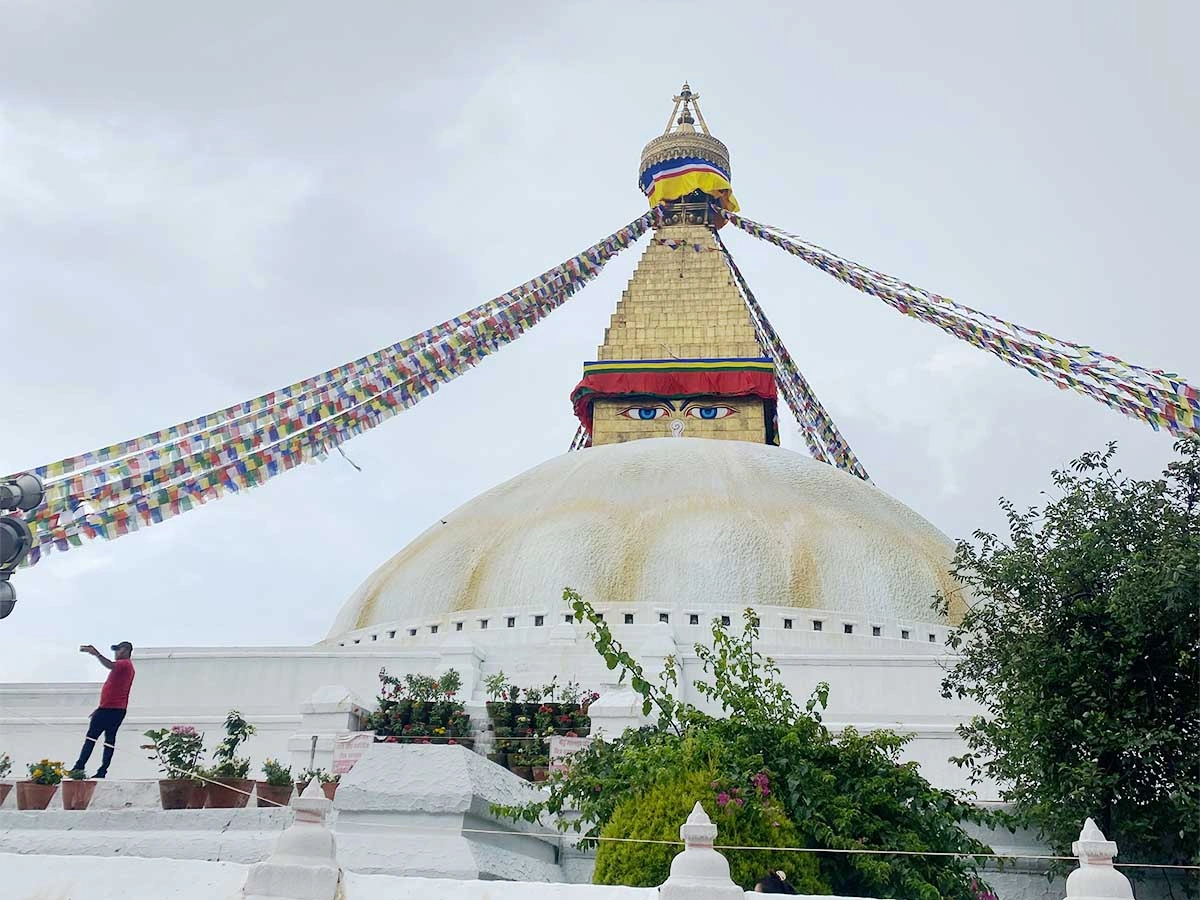
This stupa is believed to be built on the relics of Kashyap Buddha. The stupa is also known as Chintaamani, the wish-fulfilling jewel. Bouddhanath is located approximately 7.5 km away from the eastern part of Kathmandu Durbar Square. It occupies an area of 7631.06 sq. m with a height of 43.03 meters. It has a dome that is 100 feet wide. Inside, there is a harmika made of copper. The harmika has blue eyes that connect the world in four directions.
As per the Buddhist philosophy, different parts of the stupa symbolize the 5 elements, where the plinth symbolizes earth, the dome symbolizes water, the thirteen rings symbolize fire, the parasol symbolizes air, and the pinion symbolizes sky.
Different ethnic groups called it by different names, where the Newars called it Khasti Chaitya, the Tamang community people called it Khasa Chitha, and since ancient times, the Tibetan people have called it Jhyarung Khashyor.
Boudhanath Stupa has been listed as a UNESCO World Heritage Site since 1979. The Buddhists around the world see this as the rarest jewel. While taking Guru Padmasambhav’s Terma/Nidigrantha, the present-day figure of the stupa is said to have been made during the 16th century.
Pashupatinath
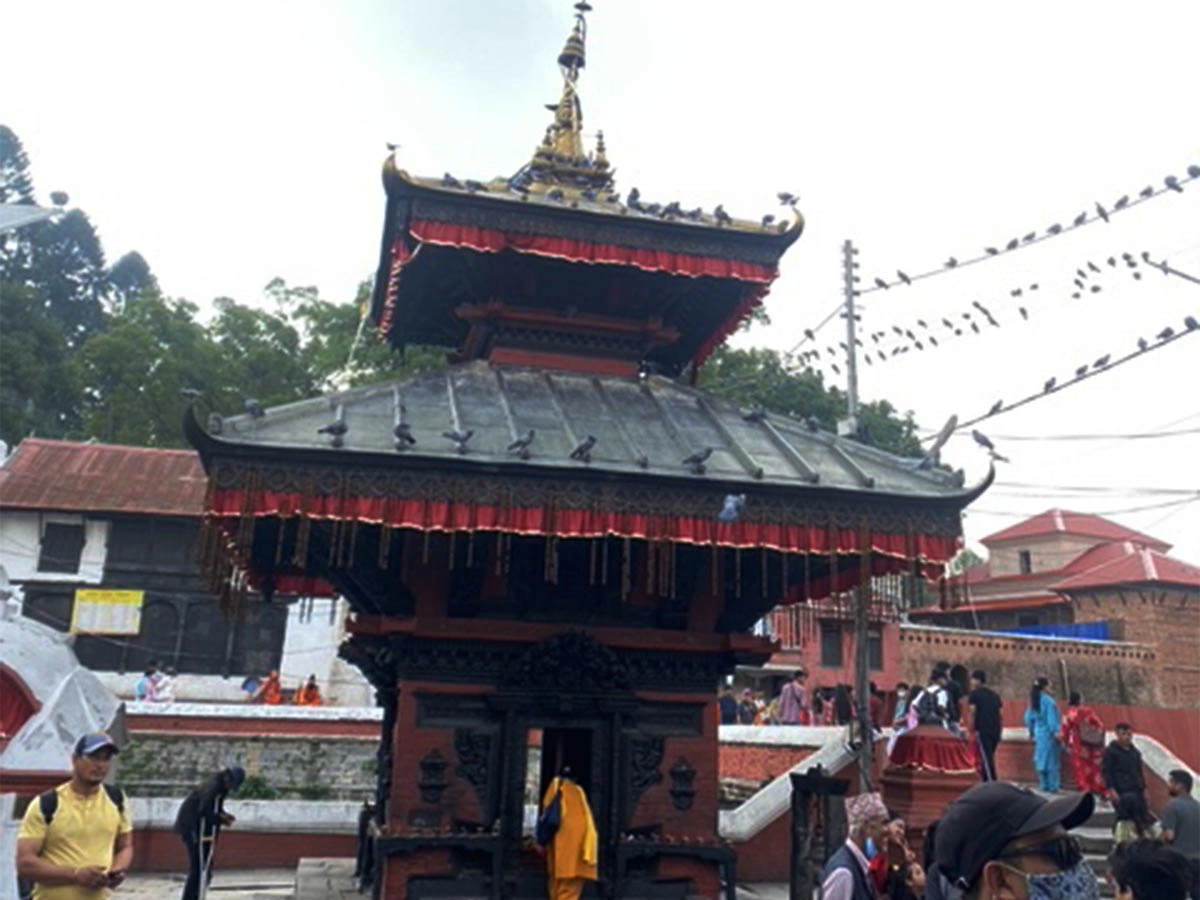
This temple is one of the most sacred in Hinduism. It is located on the bank of the Bagmati River. The main temple of Pasupatinath is dedicated to Lord Shiva. The main temple is located on the western bank of the Bagmati River.
This temple is also important for cremation, as it is believed that people who die in Pasupatinath are reborn on earth as humans. This temple has two ghats: Bhasmeshwor Ghat and Arya Ghat.
Bhasmeshwor Ghat : It is one of the best ghats to be cremated at as per the Puran, as when a body is cremated here, the smoke is blown away and gets to the Shiva Linga, which makes them go to heaven directly. It is also known as the common people's ghat in Nepali society.
Arya Ghat : It is one of the ghats of Pasupati near Bramhanal, where the dead body is purified with Bagmati water and given a last goodbye. This ghat is primarily used for the cremation of VIPs.
The monuments that are found in Pasupati are as old as the 2nd century, which is Narayan Murti ob Ghat. The temple of Pasupatinath is surrounded by 9 devis, like Jay Bagheshowri, Bhuwaneshowri, Batchaleshwori, Raj Rajeshwori, Guhyeshwari, Jhankeshwori, Man Manseshwori, Koteshwori, and Maha Gauri.
The main temple of Pashupati is built in a Nepali style with multiple roofs. The first floor has six gods on each side. These gods symbolize each yuga.
| Side | Yuga | Gods it reperesent |
|---|---|---|
| Uttar (North Side) | Satya Yuga | Brahma, Vishnu, Shiva, Parvati, Ganesh, and Kumar |
| Dakshin (South Side) | Dwapara Yuga | Yudhishthira, Bhima, Arjuna, Nakula, Sahadeva, and Draupadi |
| Pashim (West Side) | Treta Yuga | Ram, Laxman, Sita, Bharat, Satrugan, and Hanuman |
| Purba (East Side) | Kali Yuga | Krishna, Balarama, Rukmani, Sateybhama, Bishwokarma , and Mayo Danav |
Patan Durbar Square
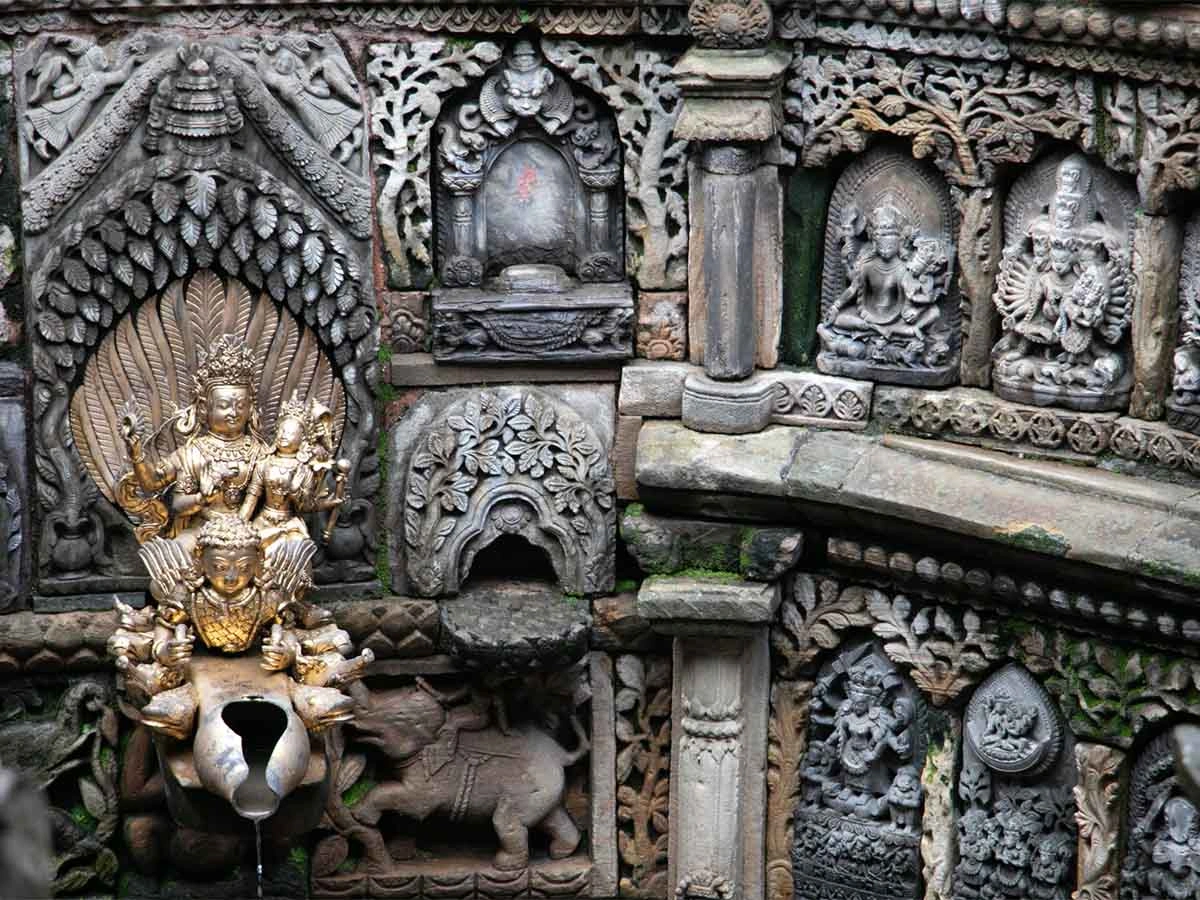
Patan is known by different names, like Lalitpur and Yala. The name Patan means “flat land” or “best land” in Nepali. In this city, people used to live from the Neolithic Age, as during excavation, Lu Bu’s weapons were found. One of the oldest murals of the valley, Gajalaxmi, which is from the 1st century AD, can be found there. This city has preserved and promoted ancient metal craft techniques. It is rich in Dhatu Kala and also has one of the best museums in South Asia.
The structures we can see in Patan are mostly from the Siddhi Narasimha Malla period, which is around 1675. It is rich in terms of architecture. Patan is one of the best places to see palace buildings, artistic courtyards of Durbar, and beautiful Nepalese-style temples.
Krishna Temple : It is a shikhara-style temple, which is also called the 21-pinnacle temple, as it has 21 gajur in it. It was built by King Siddhi Narasimha Malla entirely with stone in 1637 and was recently renovated in 2018.
Mahabouddha : It is located on the east side of Patan Durbar Square, which was constructed by Achey Raja Pandit in 1622. It is a beautiful example of terracotta art, which has 1000 Buddha statues of Sakhey Muni Buddha.
Hiranya Varna Mahabihar : It is also known as the Golden Temple, which dates from the 12th century. There is an image of Sakyamuni Buddha in the garba griha, or center of the temple. This Mahabihar is used to provide education to the Buddhist students. It is also important and unique as it has a child priest for the temple.
Swayambhunath Mahachaitya
Swayambhunath is located northwest of Kathmandu Valley on top of a hill . It is also called Monkey Temple as it is surrounded by thousands of monkeys. It is one of the holiest Buddha Stupas in Nepal . The name Swayambhu means self-evolved when the valley was created from the lake . The legend says that it was born out of the lotus flower that was in the middle of the lake .
There is also Basubandu Chaitya, which was built in remembrance of Basubandu during the Bhuvan Laxmi period . It also has a Chaitya Park, which has lots of chaitya from the 18th , 19th, and 20th centuries.
The chaitya has 5 Dhyani Buddhas in it, like Vairochana (Represent White color and is always in the Middle ) , Akshobya (Represents Blue and is always on the East side) , Ratnasambhava ( Represents Yellow and is always on the South) , Amitabha (represents red color and always in West ) and Amoghsiddhi ( Represents Green color and always in North )
| Budhha | Colour | Direction |
|---|---|---|
| Vairochana | White | Middle |
| Akshobya | Blue | East |
| Ratnasambhava | Yellow | South |
| Amitabha | Red | West |
| Amoghsiddhi | Green | North |
.
Why Kathmandu City Tour ?
The Kathmandu City Tour package helps you to visit one of the important places, so you won't miss the beauty of Kathmandu Valley . It is also possible to do a Kathmandu half-day tour, which will be 4 hours, and includes fewer places and is best for tourists who have less time in Kathmandu . The full-day tour will last 8 hours, covering places such as Bouddhanath, Pasupatinath, Patan Durbar Square, and Swayambhunath.
If you do sightseeing using it, you would be hassled, and also Kathmandu sightseeing taxi fare would be expensive for you, as we hired a driver and car for you, which will help you make the trip easier . The Kathmandu city tour places can be different from what a different company offers and what tourists want to see, but our itinerary is as per the above .
This Kathmandu city tour costs USD $80, which includes private transportation, an undergraduate-certified guide, lunch, and monument entrance fees, so you can enjoy your city tour without any hassles. To book your tour, simply contact us via WhatsApp or email, and we will guide you through our easy and secure booking process. We accept payments through credit card, bank transfer, and popular online payment systems. In case you need to cancel, please note that cancellations made 48 hours prior to the tour will receive a full refund. If you have more questions about Kathmandu city sightseeing, please don't hesitate to contact us.